

What do ‘should’ and ‘shouldn’t’ mean?
نحن نستخدم should to say that something is a good idea. It means ‘it is recommended’ or ‘it is a good thing to do’.
- You should drink water. (It’s a good idea.)
- He should rest. (It’s recommended for him.)
نحن نستخدم shouldn’t (should not) to say that something is not a good idea. It means ‘it is not recommended’ or ‘it is a bad thing to do’.
- You shouldn’t watch too much TV. (It’s not a good idea.)
- She shouldn’t work so hard. (It’s not recommended for her.)
🎓 تعلم اللغة الإنجليزية باستخدام الطريقة المختلطة
مجموعات صغيرة · مدرس ذكاء اصطناعي متاح على مدار الساعة · التحضير لامتحانات كامبريدج
خطط من $39 $79 في الشهر
How do we form sentences with ‘should’ and ‘shouldn’t’?
The structure for should و shouldn’t is very simple. We use them with the base form of the verb (infinitive without ‘to’).
- Positive sentences: Subject + should + base verb
- Negative sentences: Subject + shouldn’t + base verb
- Questions: Should + subject + base verb?
شكل should does not change for different subjects (I, you, he, she, it, we, they). This makes it easy to use!
When do we use ‘should’?
نحن نستخدم should for many situations where we want to give advice or make suggestions.
- Giving advice: When you tell someone what is a good thing to do.
- You should go to bed early tonight.
- They should eat more vegetables.
- Making recommendations: When you suggest something good.
- We should visit the museum. It’s very interesting.
- You should try this new restaurant.
- Expressing opinion or expectation: When you think something is true or will happen.
- He should be here soon. (I expect him to arrive.)
- The movie should be good. (I think it will be good.)
When do we use ‘shouldn’t’?
نحن نستخدم shouldn’t when we want to advise against something or suggest that something is not a good idea.
- Giving negative advice: When you tell someone what is not a good thing to do.
- You shouldn’t worry so much.
- He shouldn’t spend all his money.
- Suggesting something is wrong or inappropriate:
- Children shouldn’t play with fire.
- You shouldn’t talk during the movie.
How do we ask questions with ‘should’?
لطرح سؤال، نكتب should before the subject.
- Yes/No Questions: Should + subject + base verb?
- Should I call him?
- Should we leave now?
- Wh- Questions: Wh- word + should + subject + base verb?
- What should I do?
- Where should we meet?
| Modal Verb | Meaning | Example |
|---|---|---|
| Should | Advice, recommendation (good idea) | You should rest. |
| Must | Strong obligation, necessity (very important, no choice) | You must wear a seatbelt. |
| Have to | External obligation, necessity (rule, law) | I have to work tomorrow. |
أمثلة
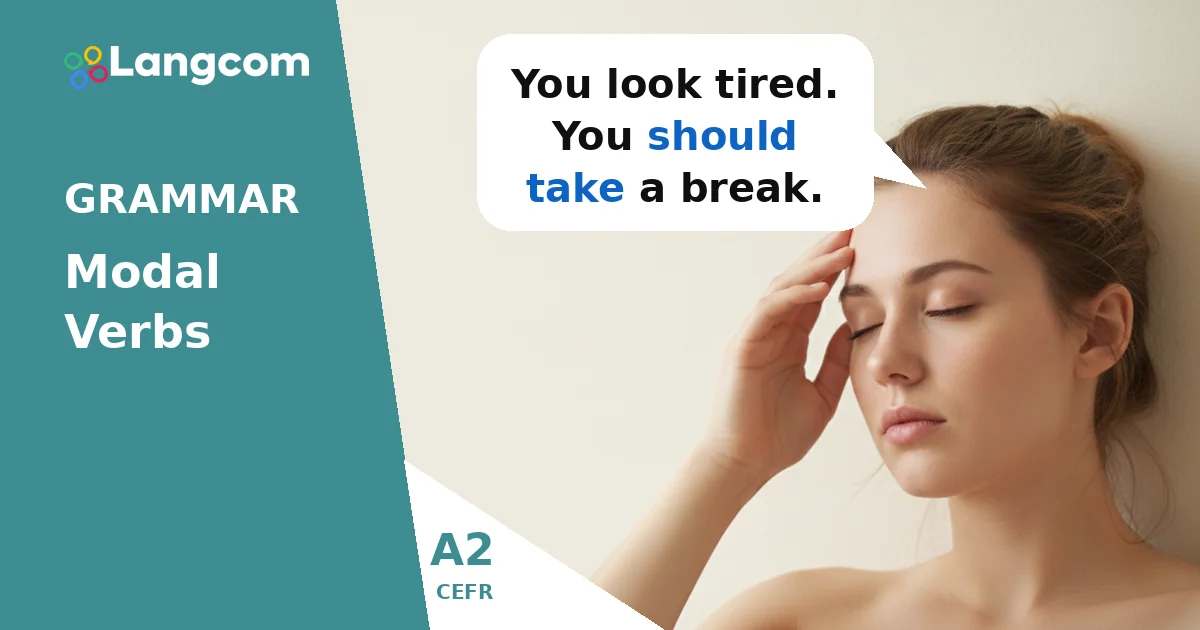
- You look tired. You should take a break.
- It’s raining. You shouldn’t forget your umbrella.
- She has a test tomorrow. She should study.
- He shouldn’t eat so many sweets. It’s bad for his teeth.
- Should I wear a jacket? It’s cold outside.
- What should we do this weekend?
التدريب
💬 هل تحتاج إلى إرشادات مخصصة؟
بصفتنا مركزًا معتمدًا للتحضير لاختبارات كامبريدج، يمكننا توجيهك نحو الدورة والشهادة المناسبتين لك. تحدث مع مستشارينا اليوم.
دردش مع مستشار على واتسابالأخطاء الشائعة لدى المتحدثين باللغة الإسبانية
Adding ‘to’ after ‘should’
A common mistake for Spanish speakers is to add ‘to’ after should. Remember, should is a modal verb, so it is followed directly by the base form of the verb.
- خطأ: You should to study.
- الصحيح: You should study.
Confusing ‘should’ with ‘must’ or ‘have to’
Should is for advice, but must و have to are for strong obligation or necessity. They are not the same!
- You should see a doctor. (It’s a good idea, a recommendation.)
- You must see a doctor. (It’s necessary, an obligation, perhaps an emergency.)
Using ‘should’ for past events without ‘have’
For past advice or regret, we use should have + past participle. Do not use should + past simple.
- خطأ: I should went to the party.
- الصحيح: I should have gone to the party.
الأسئلة الشائعة
What is the difference between ‘should’ and ‘must’?
Should gives advice or a recommendation (it’s a good idea). Must shows strong obligation or necessity (you have no choice, it’s very important).
Can I use ‘should’ to talk about the past?
Yes, but the form changes. For past advice or regret, we use should have + past participle, for example, I should have studied more.
Is ‘should’ a strong word?
لا،, should is not a strong word. It’s a gentle way to give advice or make a suggestion. It’s much softer than must أو have to.
What verb form comes after ‘should’?
After should و shouldn’t, we always use the base form of the verb (the infinitive without ‘to’), for example, go, eat, study.



0 تعليق