

What are common A1 cooking verbs?
When we cook, we do many different actions. In English, we use specific verbs for these actions. These verbs help us understand how food is prepared.
- Bake: To cook with dry heat, usually in an oven.
- Boil: To cook food in very hot water.
- Fry: To cook food in hot oil or fat, usually in a pan.
- Grill: To cook food using direct heat, often on a metal rack.
- Roast: To cook food in an oven with oil, usually meat or vegetables.
🎓 Apprenez l'anglais grâce à la méthode mixte
Petits groupes · Tuteur IA disponible 24 h/24, 7 j/7 · Préparation aux examens de Cambridge
Plans provenant de $39 $79 par mois
When do we use 'bake'?
Nous utilisons bake when we cook food in an oven using dry heat. We often bake things like bread, cakes, and cookies.
- I want to bake a cake for my birthday.
- She bakes fresh bread every Sunday.
When do we use 'boil'?
Nous utilisons boil when we cook food in very hot water. The water gets hot and makes bubbles. We often boil pasta, eggs, or vegetables.
- Please boil some water for the tea.
- He likes to boil eggs for breakfast.
When do we use 'fry'?
Nous utilisons fry when we cook food in a pan with hot oil or fat. This makes the food crispy and brown. We often fry eggs, bacon, or potatoes.
- Let's fry some chicken for dinner.
- She likes to fry vegetables with rice.
When do we use 'grill'?
Nous utilisons grill when we cook food using direct heat. This can be under a hot element in the kitchen or over hot coals outside (like a barbecue). We often grill meat, fish, or vegetables.
- We will grill burgers for the party.
- Can you grill the fish for five minutes?
When do we use 'roast'?
Nous utilisons roast when we cook food in an oven, often with some oil. We usually roast larger pieces of meat or root vegetables. This makes them tender inside and crispy outside.
- My mother likes to roast a chicken on Sundays.
- We can roast potatoes with the meat.
| Verb | What it means | What you cook |
|---|---|---|
| Bake | Cook in an oven (dry heat) | Bread, cakes, cookies |
| Boil | Cook in hot water | Pasta, eggs, vegetables |
| Fry | Cook in hot oil/fat in a pan | Eggs, bacon, potatoes |
| Grill | Cook with direct heat (e.g., BBQ) | Chicken, fish, burgers |
| Roast | Cook in an oven with oil | Meat (chicken, beef), root vegetables |
Exemples
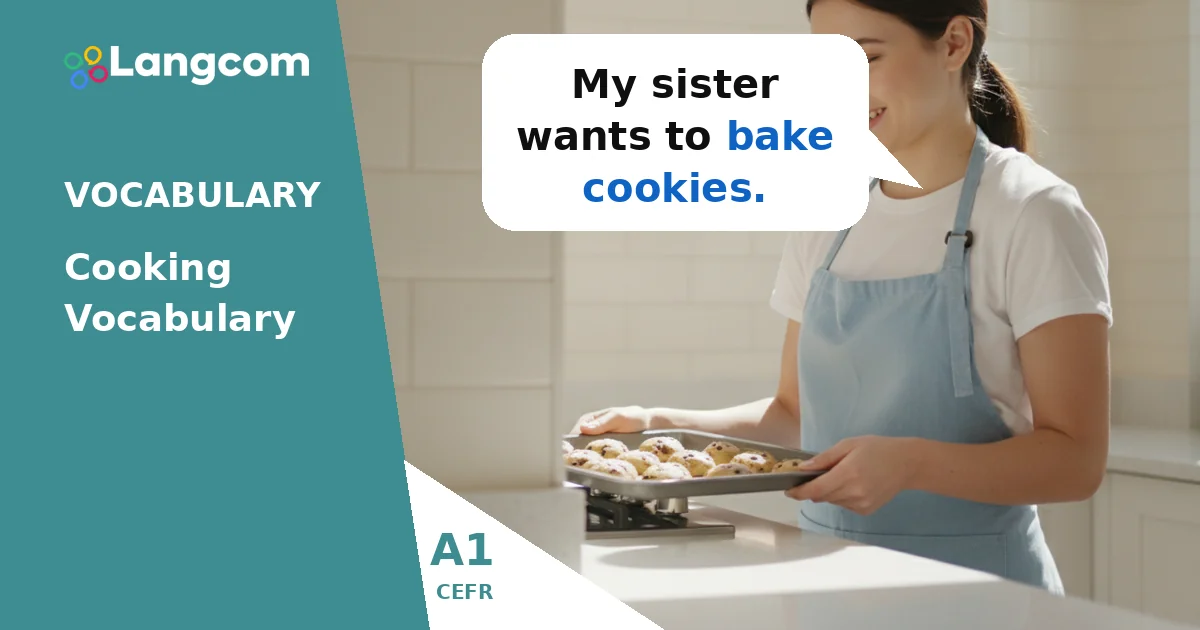
- My sister wants to bake cookies.
- Don't forget to boil the pasta.
- I will fry an egg for you.
- Let's grill some sausages.
- They like to roast vegetables in the oven.
Entraînement
💬 Vous avez besoin de conseils personnalisés ?
En tant que centre de préparation agréé par Cambridge, nous pouvons vous aider à choisir la formation et la certification qui vous conviennent. Discutez-en dès aujourd'hui avec nos conseillers.
Discutez avec un conseiller sur WhatsAppErreurs courantes chez les hispanophones
Spanish speakers sometimes confuse bake, roast, et grill because the Spanish verb asar can mean all three. Remember these differences:
- Use bake for bread, cakes, and pastries (no oil, dry heat in oven). Incorrect: I roast a cake. Correct: I bake a cake.
- Use roast for meat or vegetables in the oven, usually with oil. Incorrect: I bake chicken. Correct: I roast chicken.
- Use grill for cooking with direct heat, often on a barbecue or under a broiler. Incorrect: I roast fish on the BBQ. Correct: I grill fish on the BBQ.
Questions fréquemment posées
What is the main difference between 'bake' and 'roast'?
Both bake et roast use an oven. You usually bake things like bread or cakes without oil. You usually roast meat or vegetables, often with oil, to make them brown and tender.
Can I 'fry' vegetables?
Yes, you can definitely fry vegetables! Many people fry onions, peppers, or mushrooms in a pan with a little oil.
What kind of food do we 'grill'?
We often grill foods that cook quickly with direct heat. Common foods to grill are chicken, fish, sausages, burgers, and some vegetables like corn or zucchini.
Why is cooking vocabulary important for A1 learners?
Learning cooking vocabulary at A1 helps you talk about daily activities. You can describe what you eat, what you want to cook, or understand simple recipes. It's very useful for everyday conversations.


0 commentaire