

What Are Travel Collocations and Why Are They Important?
Collocations are simply words that naturally go together in English. Think of them as word friends! For example, we say fast food, ، وليس quick food, even though both words mean something similar. Using collocations makes your English sound more natural and correct.
For B1 English learners, travel collocations are especially useful. They help you talk about holidays, trips, and adventures clearly. Knowing these phrases means you can:
- Describe your travel experiences easily.
- Understand native speakers better.
- Sound more fluent and confident when you speak.
🎓 تعلم اللغة الإنجليزية باستخدام الطريقة المختلطة
مجموعات صغيرة · مدرس ذكاء اصطناعي متاح على مدار الساعة · التحضير لامتحانات كامبريدج
خطط من $39 $79 في الشهر
Essential Verbs for Your Travel Plans
Many travel collocations start with common verbs. Here are some important ones for your next trip:
- Make / Change plans: To decide what you will do, or to alter those decisions.
- We need to make plans for our summer trip.
- I had to change my plans because of the weather.
- Travel / Live abroad: To go to or reside in a foreign country.
- Many students travel abroad for their studies.
- She decided to live abroad for a year in Spain.
- Stay at / Go back home: To remain in your house or return to your house/country.
- I prefer to stay at home during the holidays.
- After a long trip, it's nice to go back home.
- Plan / Have a holiday: To arrange a vacation or to experience one.
- Are you planning a holiday this year?
- We had a wonderful holiday in Italy.
- Book / Stay in a hotel: To reserve a room or to reside there temporarily.
- Don't forget to book a hotel in advance.
- We stayed in a lovely hotel by the beach.
- Pack / Unpack a bag: To put clothes and items into a bag for a trip, or to remove them after a trip.
- I need to pack my bag tonight for the flight.
- When I got home, I immediately unpacked my bag.
Using Travel Collocations in Sentences
Let's see these collocations in full sentences. Notice how they make the English sound natural and clear:
- When I travel abroad, I always make plans to visit local markets.
- We decided to book a hotel near the city center for our trip.
- After a busy year, I really need to have a holiday and relax.
- Don't forget to pack your bag with warm clothes if you're going to the mountains.
- Even though I love to live abroad, I always enjoy going back home for Christmas.
| Verb | Noun/Phrase |
|---|---|
| Make | plans |
| Change | plans |
| Travel | abroad |
| Live | abroad |
| Stay at | home |
| Go back | home |
| Plan | a holiday |
| Have | a holiday |
| Book | a hotel |
| Stay in | a hotel |
| Pack | a bag |
| Unpack | a bag |
أمثلة
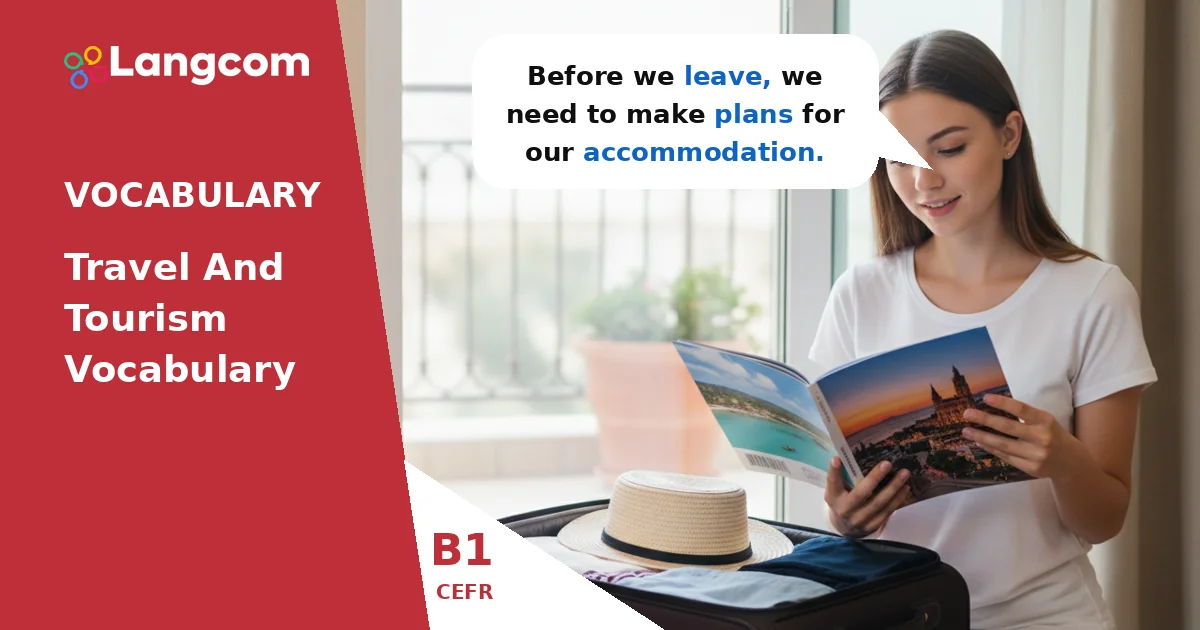
- Before we leave, we need to make plans for our accommodation.
- She dreams of travelling abroad and living in a different culture.
- They decided to stay at home for the long weekend instead of going away.
- We had a fantastic holiday last summer, staying in a charming hotel.
- Remember to pack your bag with essentials before you go to the airport.
التدريب
✍️ لست متأكدًا من مستواك؟
خُذ اختبار تحديد المستوى المجاني الخاص بنا واحصل على تعليقات مخصصة من ممتحنين معتمدين من كامبريدج.
قم بإجراء اختبار تحديد المستوى المجانيالأخطاء الشائعة لدى المتحدثين باللغة الإسبانية
Spanish speakers sometimes make common mistakes with travel collocations due to direct translation. Be careful with these:
- خطأ: Do plans
الصحيح: Make plans
In English, we use make مع plans, ، وليس do. - خطأ: Go to abroad
الصحيح: Travel abroad أو Live abroad
الكلمة abroad already includes the idea of "to a foreign country," so you don't need "to." - خطأ: Take a holiday (while sometimes acceptable, have a holiday is more common for the experience of it, and is the one taught here)
الصحيح: Have a holiday
To talk about enjoying or experiencing a vacation, have a holiday is the most natural collocation. - خطأ: Stay in home
الصحيح: Stay at home
When referring to your own residence, we typically use the preposition at مع home.
الأسئلة الشائعة
What exactly is a collocation in English?
A collocation is a combination of two or more words that often appear together and sound natural to native speakers. For example, we say heavy rain, ، وليس strong rain.
Why should I learn travel collocations at B1 level?
Learning travel collocations at B1 helps you speak more fluently and naturally about your trips and vacations. It improves your vocabulary and makes your English sound more authentic, which is important for everyday conversations and exams.
Can I use other verbs with these nouns, like "take a holiday"?
While some variations exist (e.g., take a holiday is also common), this lesson focuses on the most frequent and natural collocations like have a holiday. Sticking to these will ensure your English sounds consistently correct and fluent.
How can I remember these travel collocations?
The best way is to practice them! Try to use them in sentences, write them down, and listen for them when you watch English videos or listen to podcasts. The interactive exercise after this lesson is a great way to test your knowledge and reinforce what you've learned.


0 تعليق