

What Are the Four Seasons in English?
The year has four main parts, called seasons. Each season has different weather and different things happen in nature.
-
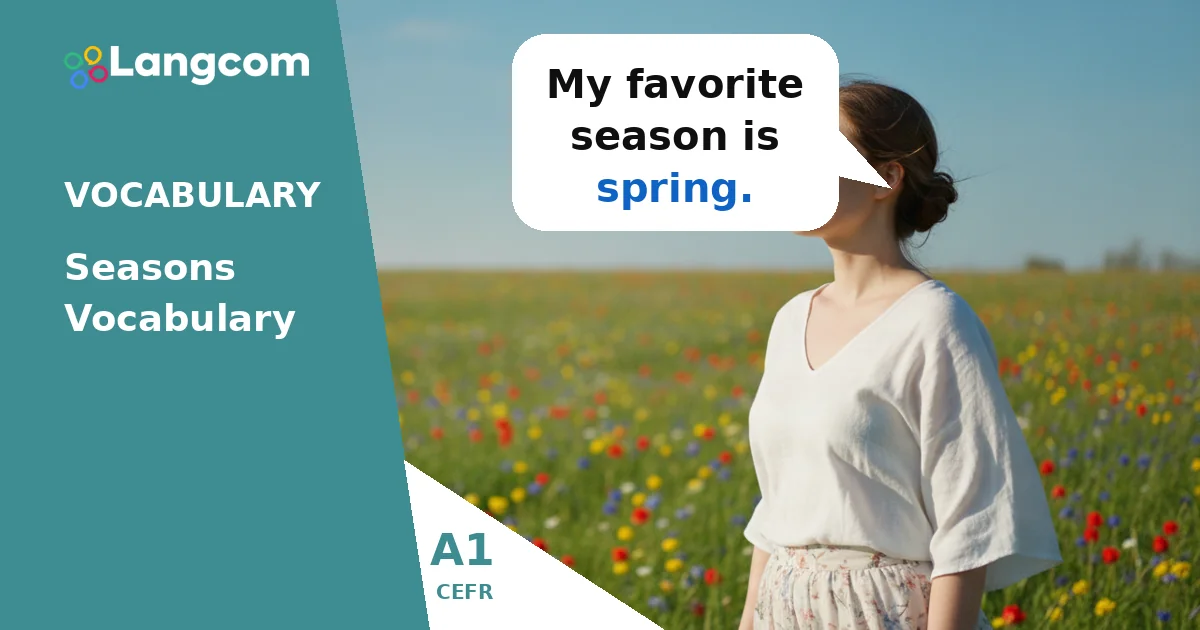
Spring: This season comes after winter. The weather gets warmer. Flowers start to grow, and trees get new leaves. It often rains in spring.
-
Summer: This is the hottest season. The days are long, and the sun shines a lot. People often go to the beach or do outdoor activities in summer.
-
Autumn (or Fall): This season comes after summer. The weather gets cooler. Leaves on the trees change color to red, orange, and yellow, and then they fall off. It can be windy.
-
Winter: This is the coldest season. The days are short, and the nights are long. Sometimes it snows. People wear warm clothes like coats and scarves in winter.
🎓 Impara l'inglese con il metodo misto
Piccoli gruppi · Tutor IA disponibile 24 ore su 24, 7 giorni su 7 · Preparazione agli esami di Cambridge
Piani da $39 $79 al mese
Talking About the Weather in Each Season
We often talk about the weather when we talk about the seasons. Here are some common weather words for each season:
-
In spring: warm, rainy, sunny.
-
In summer: hot, sunny, clear.
-
In autumn: cool, windy, cloudy.
-
In winter: cold, snowy, icy.
You can use these words to describe the weather. For example, It is warm in spring. oppure It is snowy in winter.
Why is it Important to Learn Seasons Vocabulary?
Learning the names of the seasons is very useful for many reasons:
-
Daily Conversations: You can talk about the weather or your plans. For example, I want to go to the park in spring.
-
Understanding Others: When people talk about their holidays or activities, they often mention the season. For example, My birthday is in summer.
-
Reading and Listening: You will see and hear these words in books, songs, and movies. This helps you understand more English.
| Season | Typical Weather |
|---|---|
| Spring | Warm, rainy, flowers grow |
| Summer | Hot, sunny, long days |
| Autumn / Fall | Cool, windy, leaves change color |
| Winter | Cold, snowy, short days |
Examples
- My favorite season is spring.
- It is very hot in summer.
- The leaves fall in autumn.
- I wear a big coat in winter.
- What is the weather like in your country in spring?
- We go swimming every summer.
Practice
💬 Hai bisogno di una consulenza personalizzata?
In qualità di Centro autorizzato di preparazione agli esami Cambridge, possiamo aiutarti a scegliere il corso e la certificazione più adatti alle tue esigenze. Contatta oggi stesso i nostri consulenti.
Chatta con un consulente su WhatsAppCommon mistakes for Spanish speakers
One common point of confusion for learners is the word for the season after summer.
-
In British English, we usually say autumn.
-
In American English, people usually say fall.
Both are correct! You can use either autumn oppure fall, but it’s good to know both. For example, I love the colors of autumn. e I love the colors of fall. both mean the same thing.
Domande frequenti
How many seasons are there in English?
There are four main seasons in English: spring, summer, autumn (or fall), and winter.
What is the difference between ‘autumn’ and ‘fall’?
Autumn is the common word for the season after summer in British English. Fall is the common word for the same season in American English. Both are correct.
What is the warmest season?
The warmest season is summer. It is usually hot e sunny.
What is the coldest season?
The coldest season is winter. It is usually cold, and sometimes it snows.



0 Commenti