


Why do we use ‘Be Going To’ in English?
Wir verwenden be going to for two main reasons when we talk about the future.
- To talk about future plans and intentions: These are things you have already decided to do. You have a plan in your mind.
- To make predictions based on present evidence: This means you see something now that tells you what will happen in the future.
✍️ Du bist dir nicht sicher, auf welchem Niveau du bist?
Machen Sie unseren kostenlosen Einstufungstest und erhalten Sie individuelles Feedback von zertifizierten Cambridge-Prüfern.
Machen Sie unseren KOSTENLOSEN EinstufungstestHow do we form sentences with ‘Be Going To’?
The basic structure for be going to is always the same:
- Subject + verb ‘to be’ (am/is/are) + going to + base form of the main verb
Let’s look at the different forms:
Positive Sentences
Use the correct form of to be (am, is, are) with going to.
- I am going to visit my grandparents next weekend.
- She is going to start a new job soon.
- They are going to buy a new car.
Negative Sentences
Hinzufügen not after the verb to be.
- I am not going to watch TV tonight.
- He isn’t going to come to the party.
- We aren’t going to travel this summer.
Questions
Start the question with the verb to be (Am, Is, Are).
- Are you going to study for the exam?
- Is she going to call you later?
- What are they going to do tomorrow?
Short Answers
Use Yes/No + subject pronoun + am/is/are (or am not/isn’t/aren’t).
- Yes, I am. / No, I’m not.
- Yes, she is. / No, she isn’t.
- Yes, they are. / No, they aren’t.
| Betreff | Positive | Negative | Question |
|---|---|---|---|
| I | am going to + verb | am not going to + verb | Am I going to + verb? |
| He/She/It | is going to + verb | isn’t going to + verb | Is he/she/it going to + verb? |
| You/We/They | are going to + verb | aren’t going to + verb | Are you/we/they going to + verb? |
Beispiele
- I am going to learn to play the guitar. (Plan)
- Look at those dark clouds! It is going to rain. (Prediction based on evidence)
- They are going to have dinner at a restaurant tonight. (Plan)
- She isn’t going to finish her homework on time. (Prediction based on evidence)
- Are we going to visit the museum tomorrow? (Question about a plan)
- He is going to be late for work. (Prediction based on evidence)
- My brother is not going to help me with this project. (Intention/Plan)
Übung
Bist du bereit, dein Zertifikat zu erwerben?
Der Kurs Langcom bereitet die Teilnehmer auf die Prüfungen von Cambridge, IELTS, TOEFL, DELE, SIELE und Michigan vor.
Erste Schritte mit LangcomHäufige Fehler bei Spanischsprechern
Many Spanish speakers make similar mistakes with be going to. Watch out for these:
- Forgetting ‘to be’: In Spanish, you might say “Voy a estudiar.” But in English, you must include the verb to be.
✗ I going to study.
✓ I am going to study. - Using ‘to’ twice: After going to, you use the base form of the verb. Do not add another to.
✗ She is going to to buy a new phone.
✓ She is going to buy a new phone. - Confusing with ‘will’: For definite plans or predictions based on evidence, be going to is usually better than will at this level.
✗ I will visit my aunt next week. (If it’s a definite plan)
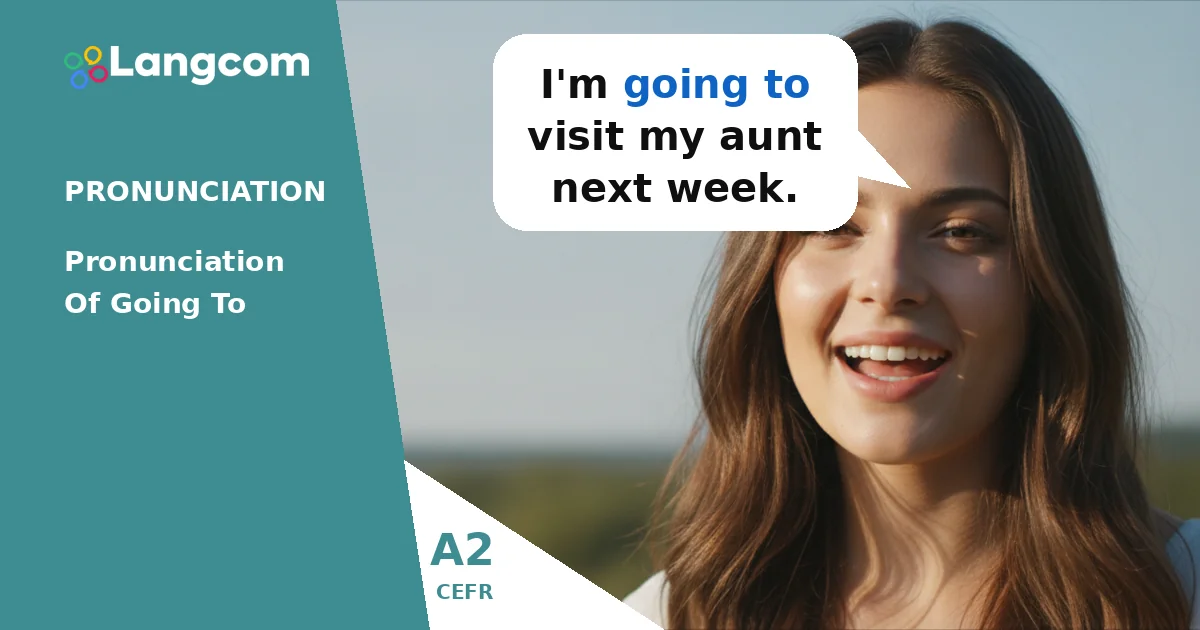
✓ I am going to visit my aunt next week.
Häufig gestellte Fragen
What is the main difference between ‘be going to’ and ‘will’ for future?
For A2 learners, remember that be going to is for plans you have already made or predictions based on what you see now. Will is often used for spontaneous decisions or general predictions without clear evidence.
Can I use contractions with ‘be going to’?
Yes, absolutely! Contractions are very common in spoken English. For example, I’m going to, He’s going to, They’re going to. For negative forms, you can say isn’t going to oder aren’t going to.
Is ‘be going to’ important for the A2 Key (KET) exam?
Ja, be going to is a key grammar point for the A2 Key exam. You might need to use it in the writing part to describe future plans or in the speaking part to talk about what you intend to do.



0 Kommentare